




Rabies in Canine and Feline: A Bangladesh Perspective
প্রাণিসম্পদ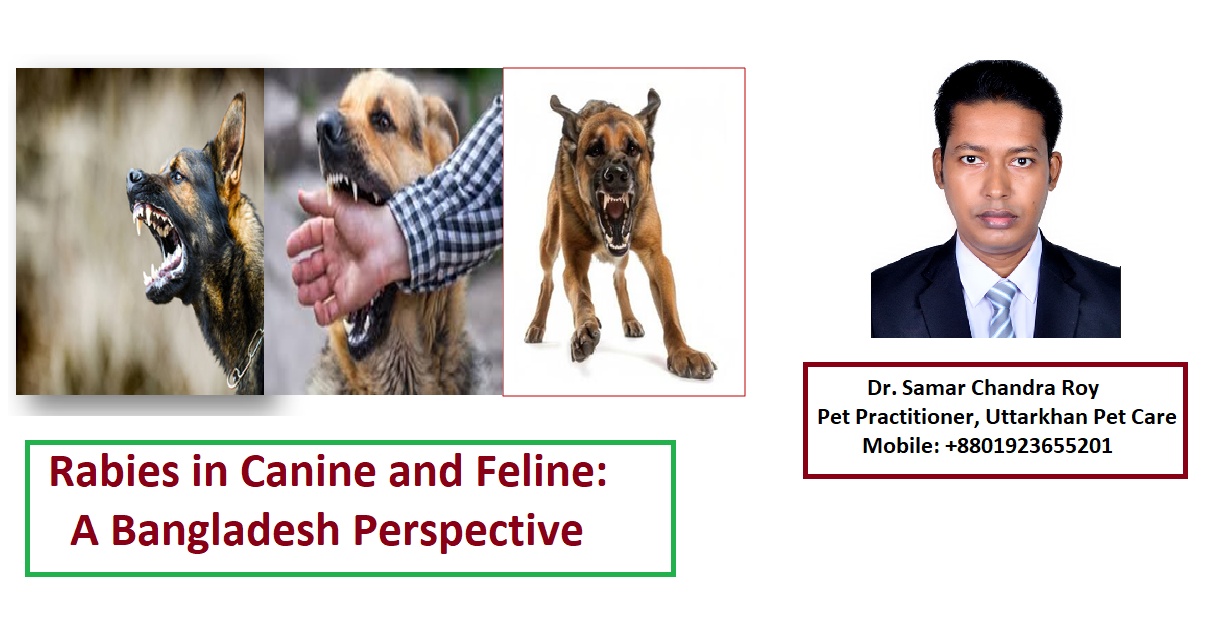
Introduction
Rabies is a fatal zoonotic disease of global public health importance, caused by a neurotropic virus that affects all warm-blooded animals, including dogs and cats. The disease is characterized by acute encephalitis and is almost invariably fatal once clinical signs appear. According to the World Health Organization, rabies causes approximately 59,000 human deaths annually, with the majority occurring in Asia and Africa.
Bangladesh remains an endemic country for rabies, where the disease continues to pose a serious threat to both human and animal health. Dogs are the principal reservoir and source of infection, while cats also contribute significantly, especially in urban settings.
In veterinary practice, rabies in canine and feline species is of particular concern due to their close association with humans. Understanding the disease dynamics, pathology, and prevention strategies is essential for controlling rabies in Bangladesh.
Causal Agent
Rabies is caused by the rabies virus, a member of the genus Lyssavirus under the family Rhabdoviridae. It is an enveloped, single-stranded, negative-sense RNA virus with a characteristic bullet shape.
The virus is highly neurotropic and spreads primarily through saliva. Transmission occurs when infected saliva is introduced into the body via:
- Bite wounds (most common)
- Scratches
- Licks on broken skin or mucous membranes
In Bangladesh, dogs are responsible for the majority of transmission, while cats account for a smaller but notable proportion.
After entry, the virus replicates locally in muscle tissue and then travels via peripheral nerves to the central nervous system (CNS), where it causes fatal encephalitis.
Epidemiology (Bangladesh Perspective)
Rabies is endemic throughout Bangladesh, particularly in rural and semi-urban areas. Several epidemiological factors contribute to its persistence:
Animal Reservoirs
- Dogs: Responsible for approximately 81–99% of rabies transmission
- Cats: Account for around 12% of cases in Bangladesh
- Other animals: Jackals, mongoose, and livestock (rare cases)
Stray Animal Population
A large population of free-roaming and unvaccinated dogs and cats is the primary driver of rabies transmission. About 85% of biting animals are stray.
Human Factors
- Poor awareness about rabies
- Delayed or absent post-exposure prophylaxis (PEP)
- Dependence on traditional healers (reported in ~78% of cases)
- Limited access to veterinary and healthcare services in rural areas
Geographical Distribution
Rabies is widespread across Bangladesh, with higher incidence in rural regions where:
- Dog vaccination coverage is low
- Animal population control is weak
Trends
Before national control programs, Bangladesh reported approximately 2,000+ deaths annually due to rabies. Mass dog vaccination campaigns have significantly reduced incidence in recent years.
Pathology
Rabies primarily affects the central nervous system (CNS).
Pathogenesis
- Virus enters through bite wound
- Replicates in muscle tissue
- Travels via peripheral nerves to spinal cord and brain
- Causes encephalitis
- Spreads centrifugally to salivary glands
Gross Lesions
- Usually minimal or absent
- Congestion of brain and spinal cord may be observed
Histopathological Findings
- Negri bodies (intracytoplasmic inclusion bodies) in neurons
- Neuronal degeneration
- Perivascular cuffing
- Gliosis
Target Organs
- Brain (hippocampus, cerebellum)
- Spinal cord
- Salivary glands
Symptoms in Canine and Feline
Rabies in dogs and cats occurs in two main clinical forms:
- Furious (Encephalitic) Rabies
More common in dogs.
In Dogs:
- Aggression and biting behavior
- Restlessness and irritability
- Hypersalivation (foaming)
- Hydrophobia (fear of water)
- Roaming behavior
- Seizures
In Cats:
- Extreme aggression
- Sudden behavioral changes
- Attacking objects or humans
- Vocalization (howling)
- Paralytic (Dumb) Rabies
More common in cats.
In Dogs:
- Progressive paralysis
- Dropped jaw
- Inability to swallow
- Death within a few days
In Cats:
- Hind limb paralysis
- Reduced aggression
- Rapid deterioration
General Clinical Course
- Incubation period: 2 weeks to several months
- Clinical phase: 3–7 days
- Death occurs due to respiratory failure
Shorter incubation periods are observed in bites near the head and neck.
Diagnostic Procedure
- Clinical Diagnosis
Based on:
- History of bite or exposure
- Behavioral changes
- Neurological signs
- Laboratory Diagnosis
Post-mortem Tests
- Direct Fluorescent Antibody Test (dFAT) (gold standard)
- Detection of viral antigen in brain tissue
Other Methods
- RT-PCR (detects viral RNA)
- Histopathology (Negri bodies)
- Ante-mortem Diagnosis
Rare in animals; may include:
- Saliva testing
- Skin biopsy
Challenges in Bangladesh
- Limited diagnostic facilities in rural areas
- Underreporting of animal rabies cases
- Lack of laboratory infrastructure
Treatment
There is no effective treatment for rabies once clinical signs appear in animals or humans.
Management of Suspected Animals
- Immediate isolation
- Observation (10 days for dogs/cats)
- Euthanasia in confirmed cases
Post-Exposure Management (Humans)
- Immediate wound washing
- Rabies vaccination
- Rabies immunoglobulin (RIG)
Timely PEP is highly effective if administered early.
In Bangladesh, lack of awareness and incomplete vaccination are major issues in treatment failure.
Prevention
- Vaccination
- Mass vaccination of dogs (≥70% coverage required)
- Regular vaccination of pet dogs and cats
Common Rabies Vaccines in Bangladesh (Canine & Feline)
- Rabisin®
- One of the most widely used veterinary rabies vaccines in Bangladesh
- Used for: Dogs, cats etc.
- Type: Inactivated rabies vaccine
- Dose: 1 ml (SC/IM)
- Booster: Usually annual or as per schedule
- Locally available through veterinary pharmacies and clinics
- Nobivac® Rabies
- Popular imported vaccine brand
- Used for both dogs and cats
- Often available as:
- Single rabies vaccine
- Combination vaccines (e.g., DHPPi + Rabies, HCP + Rabies)
- Provides strong immunity with routine vaccination schedules
- Dog Population Control
- Sterilization programs
- Management of stray animals
- Public Awareness
- Education on rabies transmission
- Importance of immediate medical care after bites
- Post-Exposure Prophylaxis (PEP)
- Easily accessible vaccines
- Proper wound management
- One Health Approach
Integration of:
- Veterinary services
- Human healthcare
- Environmental management
Bangladesh has implemented a national rabies elimination strategy focusing on:
- Mass dog vaccination
- Improved access to PEP
- Public awareness campaigns
Conclusion
Rabies remains a critical zoonotic disease in Bangladesh, with dogs serving as the primary reservoir and cats contributing to transmission, particularly in urban areas. Despite being entirely preventable, rabies continues to cause deaths due to gaps in awareness, vaccination, and healthcare access.
Effective control of rabies in canine and feline populations is essential to reduce human cases. Mass dog vaccination, responsible pet ownership, and improved public health infrastructure are key strategies. The integration of veterinary and human health sectors under a One Health approach offers the most sustainable solution for rabies elimination in Bangladesh.
With continued efforts, Bangladesh has the potential to achieve the global goal of eliminating dog-mediated human rabies, ensuring a safer environment for both humans and animals.